Links
A regularly updated collection of things I find worth reading, watching, or listening to. Subscribe via RSS.
-

A fantastic profile of Jonny Greenwood, best known for his work with Radiohead and The Smile, elaborating on his work as a composer of incredible film scores.
-
“One thing I am never not thinking about, though, is how all nonfiction today feels pushed into providing solutions to inexorable problems—and how our habits as readers, and what we want from nonfiction texts, increasingly reflect that “historically specific… method of valuing work and existence” that Odell explores. We want a book to be productive, a good use of our time. But I’m not sure this is a great way to think about art or writing or reading.”
A thoughtful essay on time by Amanda Montei, touching upon a book I’ve been meaning to read (Jenny Odell’s Saving Time), upon time reclaimed by mothers, gendered time, upon having "enough time", which … no one ever seems to have.
-
Honor The Material
№ 39
An older read, tweeted by its author in response to a thought on the advancement of technology and personal computers, and the [in my opinion] seemingly boring solutions we design and build using them.
"Some things are easy to do and others are difficult. Move with the grain, and you can unlock amazing experiences. Cut against the grain, and you will struggle with even the most basic tasks. It’s common for young designers to propose designs that are either impossible or too costly to build. It’s okay—you’re learning the grain."
-
A confronting but sobering read by Anne Helen Petersen on why we’re all still exhausted from this pandemic.
-
"Several attributes and practices valorized by a monochronic understanding of time—which we could also call Rapid-Growth Capitalism time, or Productivity Fetishist time, or White Bourgeois time—are objectively in service of efficiency. And yet, big surprise, they are often highly inefficient."
Anne Helen Petersen on time (the misery of monochronic time, to be exact), based on the unwillingness of (certain) academics to accommodate for and use digital calendars, and calendar invites.
-
Walking Zelda
№ 36
Craig Mod outlines his growing up with Zelda, and his discovery of Breath of the Wild, in his Ridgeline newsletter, forever grateful to the people who enabled him to play it as a child, and to the creators of the game, and to the mountains of Japan.
-
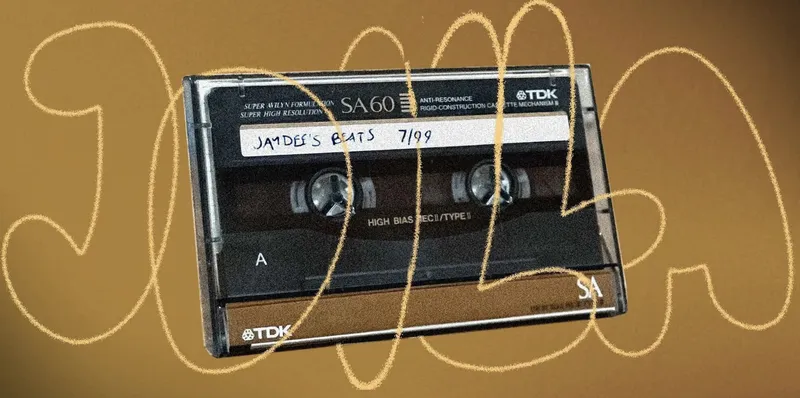
Dan Charnas—who wrote Dilla Time, one of my favourite books of last year—digs around and highlights how a cassette tape titled Another Batch did wonders for J Dilla’s notoriety. "The sounds, signatures, and techniques that actually made Dilla influential all coalesced on Another Batch."
-
After reading Dan Charnas’ book on J Dilla, I am even more convinced he belongs among the legends. This op-ed in the LA Times briefly explains why. If you’re a fan of J Dilla—or The Roots, or Thundercat, or Kamasi Washington, or Erykah Badu, or...—I highly recommend you read Dilla Time.
-
Thinking Is Work
№ 33“It is entirely reasonable to set a schedule so that in 24 hours, 8 hours are spent sleeping, 8 hours are spent working, and 8 hours are spent living. Any work that can’t be achieved in 8 hours can—must—wait until the next day.”
-

A long read distilling two years of learning by Emmanuel Quartey, who designed a home for his family in Accra, Ghana. Fascinating peek at the design process—one can only hope to be able to dabble with a project like this at some point in life.