Links / Software
-
Current: an RSS reader
№ 129I linked to Terry Godier’s thoughts on RSS before.
He followed them up by launching his own RSS reader, Current. It has no unread count: new posts arrive, linger for some time, and then quietly fade away.
A lot of deep thought went into its creation and, the occassional UX niggle aside, I find it very pleasing to use.
I’m glad he turned the concept of RSS upside down and gave it a good shake. (I do hope the square-shaped macOS icon will be updated soon!)
-
Phantom Obligation
№ 125Terry Godier on why RSS readers (still) look like email clients, and why that means the design has guilt built-in.
He asks Brent Simmons, the designer of the first RSS reader, NetNewsWire, who says:
The part I don’t understand and can’t explain is why RSS readers are still mostly following this UI. But every new RSS reader ought to consider not being yet another three-paned-aggregator. There are surely millions of users who might prefer a river of news or other paradigms. Why not have some fun and do something new, or at least different?
-
Bad Dye Job
№ 114Putting Alan Dye in charge of user interface design was the one big mistake Jony Ive made as Apple’s Chief Design Officer. Dye had no background in user interface design — he came from a brand and print advertising background. Before joining Apple, he was design director for the fashion brand Kate Spade, and before that worked on branding for the ad agency Ogilvy.
It’s baffling this man was tasked with leading user interface design at Apple. Reads like a gigantic misstep, over on Daring Fireball.
-
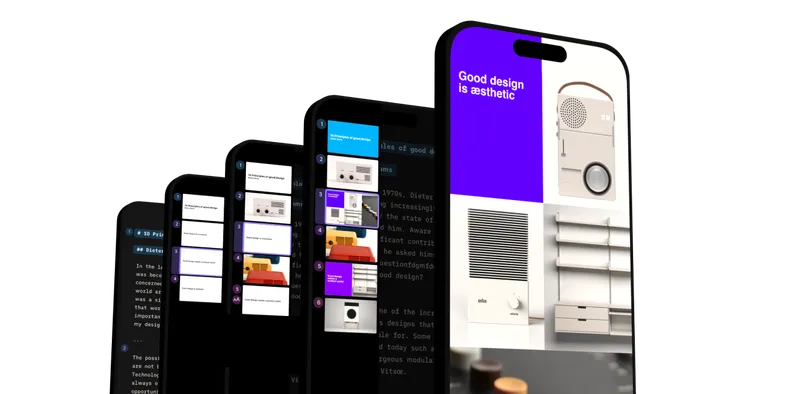
iA Presenter. Image by Information Architects. iA Writer has been my go-to writing app on Mac and iOS for over a decade, but I’ve never properly gotten stuck into iA Presenter. Its release coincided with my role shifting, and having to create fewer presentations as a result.
They’ve now released version 1.5 of their app, which has seen them strip away even more of its features to benefit the primary workflow, and I can really get behind their reasoning.
PowerPoint and similar apps start by letting you pick a design. Making your presentation look good right away sounds helpful. But in practice, it distracts. It shifts your attention to how the slides look instead of what you want to say.
Putting the focus on design from the get-go is a fundamental mistake. To make the user concentrate on the message, the design should stay in the background… until it’s time for design. Flashy colors in the default template are counterproductive.Most of making a good, thoughtful presentation (or website, for that matter), is the writing. Writing to tell a good story, rather than showing good slides. Most of their competition doesn’t seem aware of or bothered by that, and I appreciate them doubling down on this notion.
-
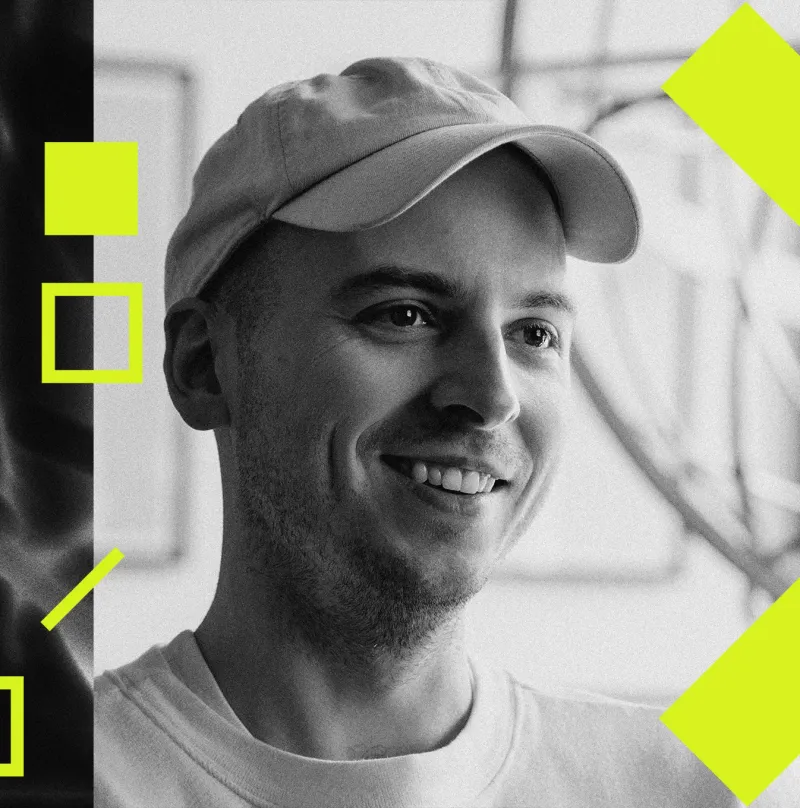
Photo by Obsidian, image editing by The Verge. Steph “kepano” Ango, the CEO of Obsidian, was interviewed by Casey Newton for Decoder. I appreciate how he—and in turn, Obsidian—thinks about building their product. They’re a small team and, while they’re ambitious, they’re not looking to raise (or make) hundreds of millions of dollars.
We’re not trying to take over the world. We’re not trying to be the next Microsoft. That makes it a lot easier to make long-term decisions that we feel are better for ourselves or for our users. It’s the tool that we want to use all day long. So, it’s okay if people leave.
Obsidian uses Markdown, and all files are local. That means you can take them wherever you go, or even edit them in whichever tool you prefer. It’s no walled garden, and if Obsidian the company ever ceases to exist, your files are fine.
I know Kepano has been on this line of thinking for a long time. I remember researching similar things years ago and stumbling upon his thinking on File over app, which is a philosophy I can get behind.
I’ve started using Obsidian this summer and while the UI is a tad clunky for my taste, I can appreciate the system they’ve created. There’s a lot to appreciate in the interview, too; on note-taking, file systems, design, and AI, among other things.
-
Sticking With It
№ 83Manuel Moreale on sticking with software.
I coded this blog on Kirby back in 2017, and it’s still on it, 8 years later. I’m writing this blog post using IA Writer, an app I’ve been using since April 2012. That’s more than 13 years ago. And the same story applies to pretty much all the apps I use the most: I’ve been using Sublime Text since 2013, Transmit since 2016, and Codekit since 2014.
What he loves about sticking with tools, or software, for the long run, is that he gets to know the people behind them. I can appreciate that. I for one am just glad when people make well-designed software that is built to last; when they charge for it from day one, and are able to continue putting time and effort into developing or maintaining it.
Software I’ve used (and paid for) for years includes iA Writer, Todoist and Lunch Money (referral link). Letterboxd too, although that’s more a social network, less a tool.
My last site ran on Framer for three-ish years. Let’s see if this one, coded with Eleventy, is around in this shape five years from now.
-
Ghost 6.0
№ 81My ex-colleagues at Ghost just released Ghost 6.0, a major update to their publishing software that includes networked publishing and native analytics.
Ghost publications are now connected with an open network. People can discover, follow, like and reply to your posts across Bluesky, Flipboard, Threads, Mastodon, WordPress, Ghost, and any other social web platform. Distribution is now built-in.
And,
We’re introducing a native analytics suite for Ghost, giving you detailed insights into how your content performs across web traffic, newsletters, and member subscriptions - all in real-time, all from the same place you publish everyday.
Alongside many other improvements, these changes mark a significant milestone for Ghost, and I’m especially keen to see how their integration with the open web evolves.
Give it a whirl with a free trial.
-
Looking elsewhere
№ 56Many great thoughts in this article by Robb Owen about craft, intentionality, standards and hype.
-
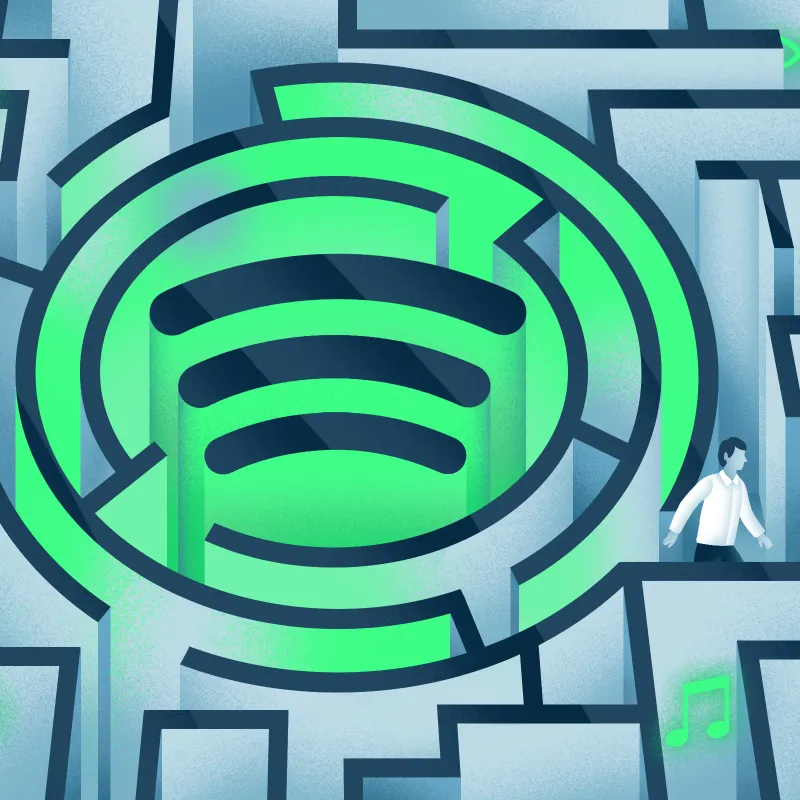
I’ve been flip-flopping between Spotify and Apple Music myself, and can relate to this piece by Kyle Chayka. Changes to their apps in recent years have not favoured (album) listeners like myself. It’s fascinating and saddening to see one platform steer the way we consume music into a certain direction.
-
Losing Alice
№ 44
“For the last two years, Sheila Heti has been writing to—and with—a chatbot. But what happens when the software gets updated?”