Links / Typography
-
I’m a fan of Matt Willey’s work. I found him through INQUE, the large-format annual literary publication he designs, and followed his work since. Here he is speaking at Typographics 2025 about designing TV titles for, among other things, Killing Eve. (He also designed the titles for Landscapers, a great show I had entirely forgotten about.)
Cheers to Charlie for sharing.
-
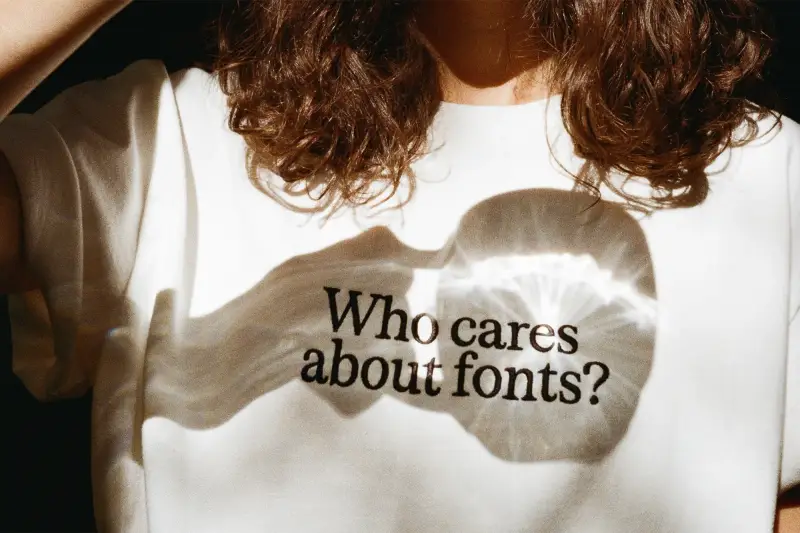
T-shirt design by Andrea Vacovská, photography by Viktorie Macánová. Over on The Brand Identity, Daniel Quisek explains how the Prague-based type foundry Displaay has overhauled its licensing and reimagined its website.
The new licensing model strips away the usual complexity. Instead of tracking device counts, managing web traffic metrics, or navigating tiered user structures, it comes down to one question: how many people work at the company? That’s it.
On top of that, they offer individual styles and custom variable packages. They even allow you to take out characters you don’t think you’ll use, and you can test everything for free on their website.
This kind of flexibility is very non-standard in the world of type foundries, but may gain traction from here on out.
Oh, and did I mention their new typeface, Serrif? What a beauty.
-
Ode to the Dinkus
№ 97
The Dinkus. Three months ago, I was a normal person. Now all I think about 24-7 is the dinkus.
I use the word dingus a lot, and had no clue that a line of three asterisks (***), often used to create a breather between two paragraphs of writing, was called a dinkus. My sincere thanks to Đorđe, who suggested I have a custom one made for Trema.
The dinkus, mind you, is not to be confused with the asterism (⁂). Daisy Alioto, writer and dinkus influencer, explained it all, years ago, over on The Paris Review.
-
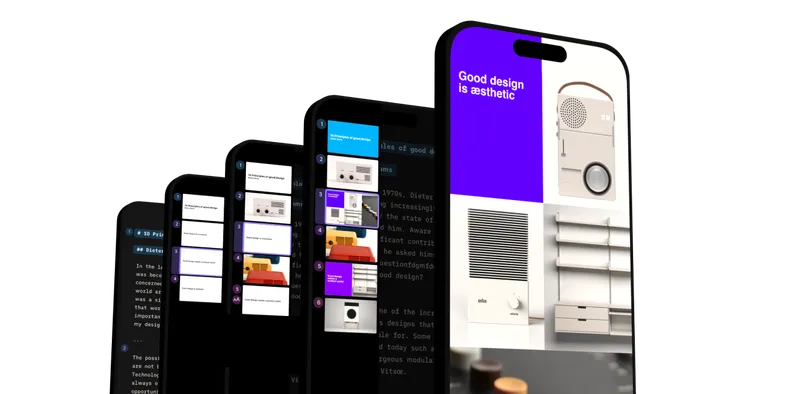
iA Presenter. Image by Information Architects. iA Writer has been my go-to writing app on Mac and iOS for over a decade, but I’ve never properly gotten stuck into iA Presenter. Its release coincided with my role shifting, and having to create fewer presentations as a result.
They’ve now released version 1.5 of their app, which has seen them strip away even more of its features to benefit the primary workflow, and I can really get behind their reasoning.
PowerPoint and similar apps start by letting you pick a design. Making your presentation look good right away sounds helpful. But in practice, it distracts. It shifts your attention to how the slides look instead of what you want to say.
Putting the focus on design from the get-go is a fundamental mistake. To make the user concentrate on the message, the design should stay in the background… until it’s time for design. Flashy colors in the default template are counterproductive.Most of making a good, thoughtful presentation (or website, for that matter), is the writing. Writing to tell a good story, rather than showing good slides. Most of their competition doesn’t seem aware of or bothered by that, and I appreciate them doubling down on this notion.
-

Teddy Blanks. Photo by Graham Dickie for The New York Times. Responsible for the opening titles of films like Barbie, Nosferatu, Midsommar and Wicked, and TV shows like Severance, Teddy Blanks is becoming the modern-day Saul Bass.
-
Usable Google Fonts
№ 86
Mike of Smith & Diction put together this useful resource, in the form of a Figma file, for picking... well, ... usable Google fonts. Take your pick!
Thanks for sharing, Cameron.
-
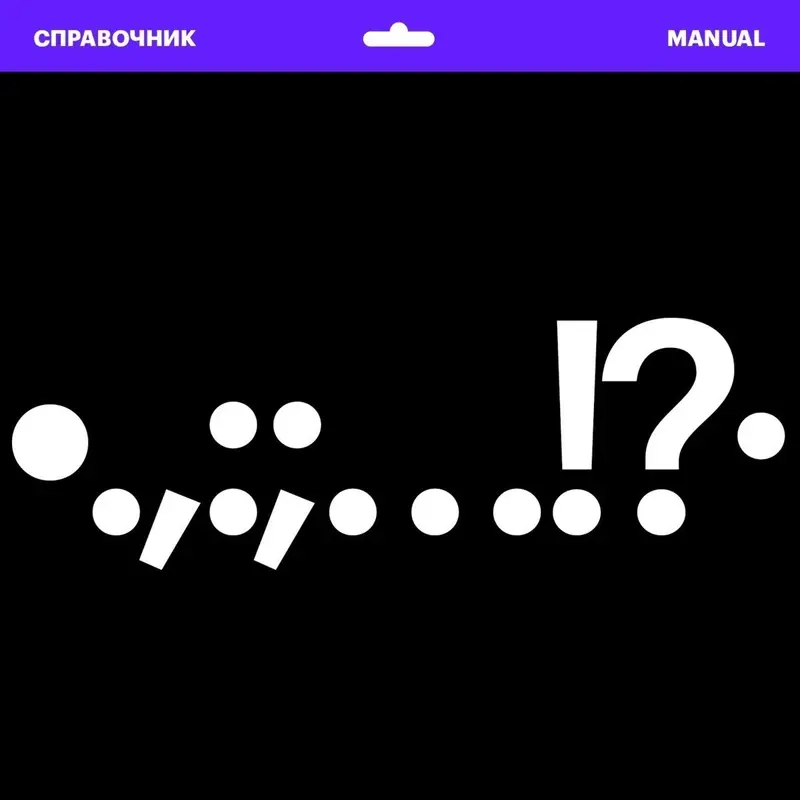
While designing a bit of UI, I was trying to find out how to type the interpunct symbol (·) on a Mac (alt + shift + 9), and found this fun, geeky little resource by type.today. They have a few different manuals up on the site that go into typographic details on things like quotation marks, spaces, dashes, brackets, and other characters you may not know a lot about. If you like type, this is a fun read.
-

Words of Type brings together the terms used in typography, illustrated and explained in multiple languages. It’s a multilingual encyclopedia for typography, initiated by Lisa Huang. She noticed a lack of consistency or availability of typographic terms. In translating them, she aims to create a useful and accessible tool for everyone interested in typography.
Here, I’m linking to her essay on its creation, available on Fontstand.
-
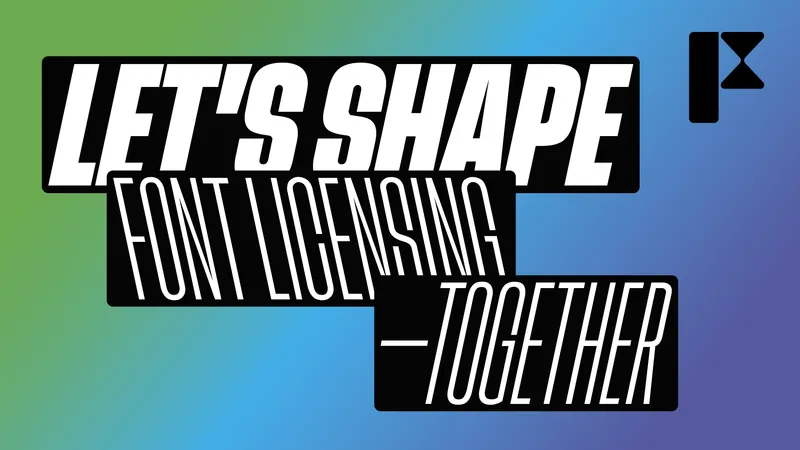
Fontstand is becoming a cooperative. They will be “owned and governed by independent type foundries” and are committed to creating a “fair, transparent and sustainable platform for font distribution”.
I’m curious to see how this shakes out. They’re running a Font User Survey which, if you ever license fonts, you might want to fill out.
As part of the process we are rethinking how fonts are licensed—aiming to design something simpler, clearer, and more intuitive for users—and this is where we need your input. We would like to hear about your experiences using fonts: What works? What’s confusing or frustrating? What would you change? Your answers will help us decide how licensing works within Fontstand Cooperative.