Links / Writing
-
Ten Writing Prompts
№ 121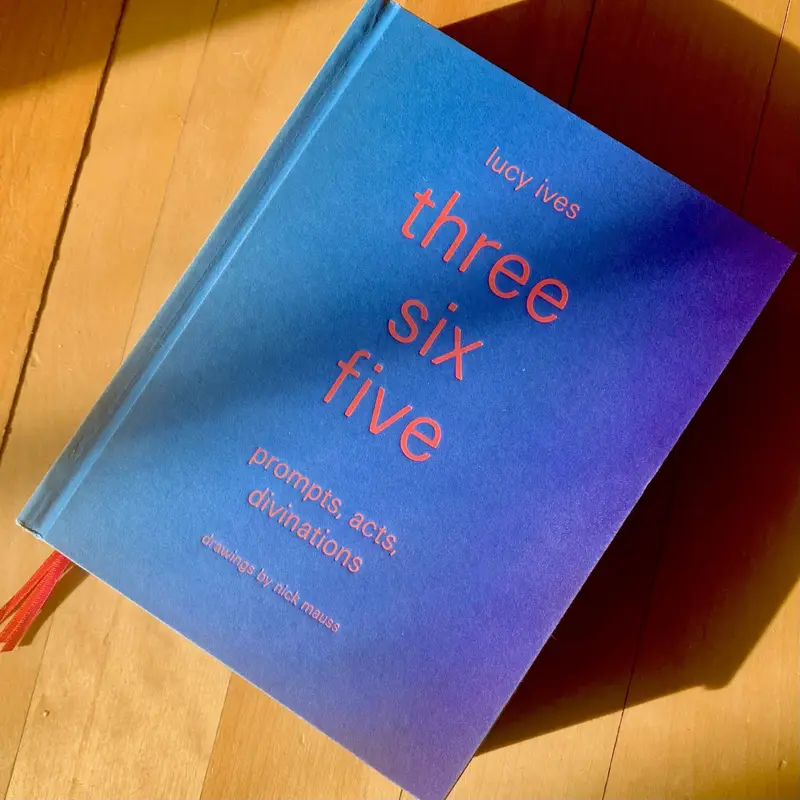
Three Six Five by Lucy Ives. Over on The Paris Review, via Iris, ten writing prompts by Lucy Ives, from her forthcoming book Three Six Five. The Distraction Diary is one I will try and implement as of this week.
If you work at a computer, keep a running account of what you are thinking at moments when, instead of continuing a task, you have a tendency to turn to “frivolous” or “unnecessary” pursuits, such as digging through social media, stalking esoteric DJs, or trawling eBay. Note your thoughts and impulses at these moments. Consider allowing the note-taking to replace the activity you had thought to turn toward. Remain aimless, if possible. Observe, describe; write things you didn’t mean to write and think things you didn’t mean to think.
-
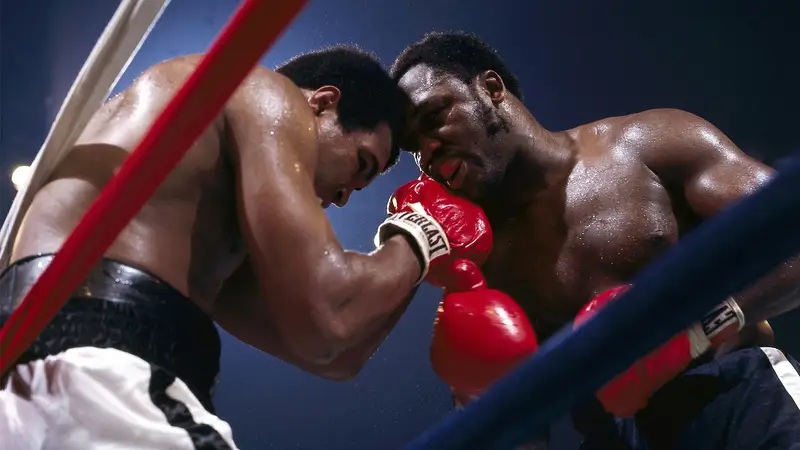
Photo by Neil Leifer for Sports Illustrated. The Thrilla in Manila, the fight between Muhammad Ali and Joe Frazier that took place in 1975, nearly killed them both. In this glorious (paywalled) piece of sports writing, Vann R. Newkirk II recounts the event, its lead-up, and its consequences. Incredible writing, putting you right in that scorching arena.
-
Your mind wants to move, and the best thing a work of art can do is take your mind with it, moving somewhere you never expected to move.
Anne Carson, interviewed at the Louisiana Literature festival in 2024. I watched it last year, and the conversation keeps resurfacing in my brain. An enigma.
-
Easy Puddings
№ 108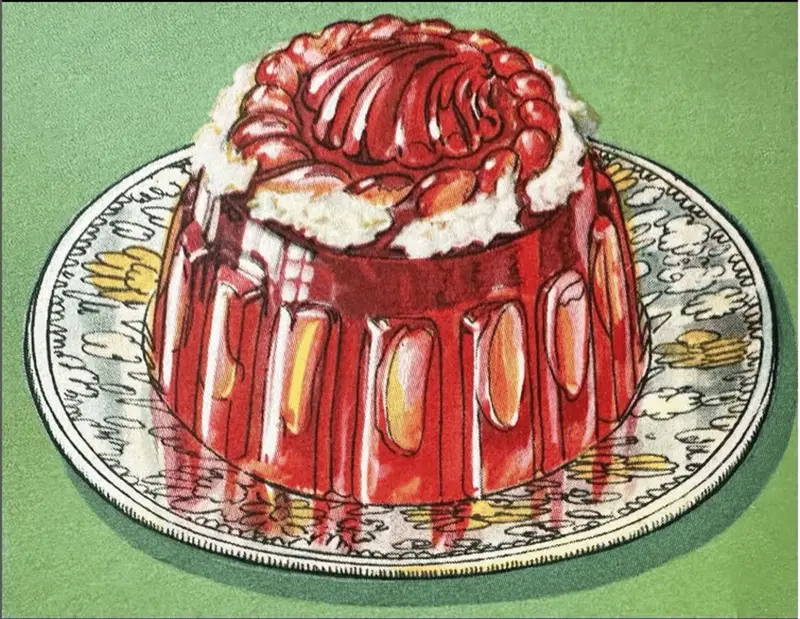
Cherry Almond Jell-O from “Quick Easy Jell-O Wonder Dishes”, 1930 My friend Iris, with whom I make TRANSCRIPT Magazine, has started a newsletter. It’s called Easy Puddings, and its first issue—On puddings, suns and other circles—is out now.
Easy Puddings is about what goes into making things, borrowing things, mixing things; about reading, writing, and other desk movements.
I chopped the e-mail up into three parts: 1) things I thought about at my desk, 2) things others have thought about at their desks and 3) a diptych as dessert. Easy.
Go ahead and subscribe, if you fancy it.
-
Illustration by Pierre Buttin. Zadie Smith, on essay writing for The New Yorker, making it sound easy (paywalled once more, I apologise). In-between the lines, her most puzzling admission, for me:
(I still write the opening and last lines of an essay first.)
Fascinating. The meandering form of an essay is difficult enough to master, let alone knowing where you’ll end it before you commence.
“Bob’s your uncle".
-
Ben Lerner’s (paywalled) essay on his open-heart surgery for The New York Review is something else. Gruelling, but beautiful.
As she removed the tape and cleaned the tips of the wires where they protruded near my lower sternum, I asked her what kind of pain I should expect. I’d been told the wires were “gently tacked” to the outermost layer of my heart wall. She said that patients rarely reported pain. [...] What people report, the nurse explained, is that it feels like mice scurrying in their chest. Wait, more than one patient has said this thing about mice? I asked. Yes, she said. A lot of people have told me that.
-
Ode to the Dinkus
№ 97
The Dinkus. Three months ago, I was a normal person. Now all I think about 24-7 is the dinkus.
I use the word dingus a lot, and had no clue that a line of three asterisks (***), often used to create a breather between two paragraphs of writing, was called a dinkus. My sincere thanks to Đorđe, who suggested I have a custom one made for Trema.
The dinkus, mind you, is not to be confused with the asterism (⁂). Daisy Alioto, writer and dinkus influencer, explained it all, years ago, over on The Paris Review.
-
A post from Cory Dransfeldt (from January of 2024) on the fracturing of social media, and the opportunity it’s presented for the personal web.
Call it the indie web, the small web or the slow web. Do or don’t label it—buy a domain, stand up a site, write and share. Find other folks doing it—maybe on Mastodon, maybe on another network, protocol or application—find out who they’re following and look at their sites. See what they’ve linked to and are reading.
I don’t remember where I found the post, but it comes at an opportune moment, as I’ve been investing lots of time in my personal website in the past two months, have rekindled my usage of RSS feeds, and found quite a few great blogs to follow. And, I just finished setting up syndication to Bluesky, bringing me one step closer to POSSE.
-
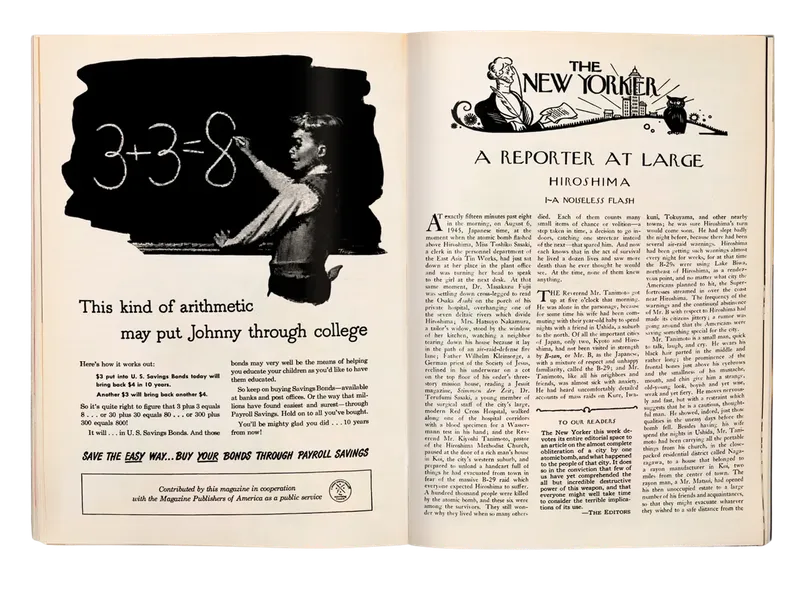
John Hersey’s original story, published in The New Yorker on August 23rd, 1946, revisited by Jane Mayer. It was first published as an article in the magazine, then republished in bookform, and sold many millions of copies. I’ve written about the book before in my newsletter; it’s a harrowing read, but I think it should be read by everyone.
It’s interesting to read about the impact it had at the time.
Stephanie Hinnershitz, a military historian, told me that Hersey’s reporting “didn’t just change the public debate about nuclear weapons—it created the debate.” Until then, she explained, President Harry Truman had celebrated the attack as a strategic masterstroke, “without addressing the human cost.” Officials shamelessly downplayed the effects of radiation; one called it a “very pleasant way to die.” Hinnershitz said, “Hersey broke that censorship.” He alerted the world to what the U.S. government had hidden.